What's in a Name? University of Guelph Students Explore the History Behind Guelph's Public Spaces
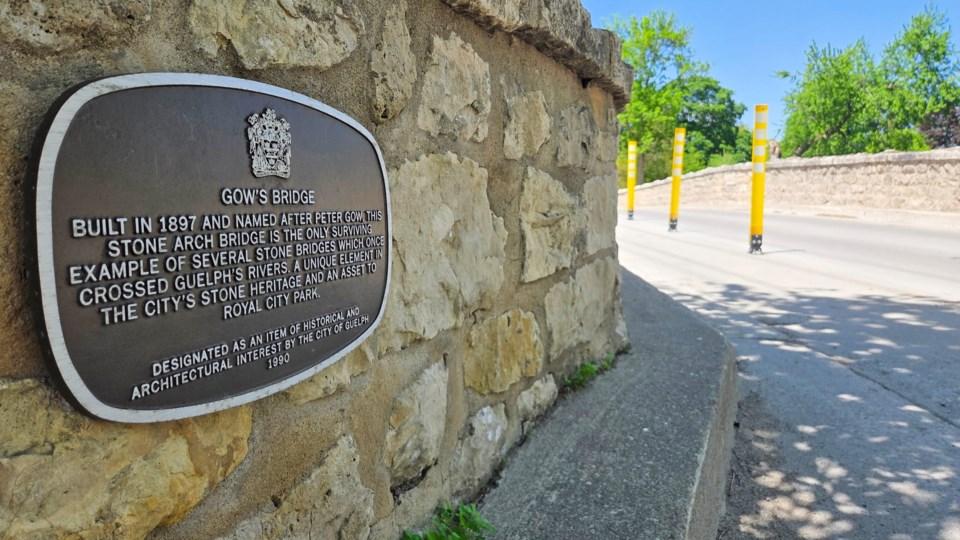
Through a collaboration between the City of Guelph, the Guelph Lab, and the University of Guelph's Research Shop, students are helping uncover the histories reflected in the city's public spaces. Street names, parks, and memorials are familiar features of everyday life, but the histories behind them often go unnoticed. Who are these places named after, and whose contributions have been recognized? The initiative began when the City's Parks department approached the Guelph Lab, a joint initiative of the City of Guelph and the University of Guelph, for support in reviewing existing naming practices and informing the development of a new municipal naming policy. The broader project involves three phases, bringing together research and community engagement to support more equitable approaches to naming public spaces.
As part of the first phase, the Research Shop, a program of the University's Community Engaged Scholarship Institute (CESI), is reviewing existing commemorative names to better understand Guelph's naming history and identify patterns in representation. The research will inform a report supporting the City's development of a new naming policy. Subsequent phases of the broader project will involve surveys and focus groups with residents, community organizations, developers, and municipal planning and policy stakeholders.
Students Supporting Community-Engaged Research
University of Guelph doctoral students Sarah Costantini, from the Department of Family Relations and Applied Nutrition, and Daniel Layden and Justina Walker-Mohamed, from the School of Environmental Design and Rural Development, are conducting the review of the City's commemorative names. Daniel and Sarah are research assistants at CESI's Research Shop, while Justina serves as a project manager. All three have contributed to the research, with Daniel and Sarah taking shared leadership roles in data collection, analysis, and writing. The team reviewed approximately 1,302 City of Guelph assets, including 1,100 streets, 127 parks, 22 buildings, and 53 monuments and other commemoratively named spaces. Their research involved examining historical records, municipal documents, and publicly available archives to identify the origins of names and the people, places, or events they commemorate. The review considers factors such as language, connections to Guelph, gender expression, race and ethnicity, and historical contributions, while examining how naming practices have changed over time.
The work builds on historical research by the late Ross W. Irwin, as well as previous City of Guelph initiatives, including geographic information system (GIS) datasets and earlier reviews of park names. The team also draws on the expertise of Dr. Lauren Beck of Mount Allison University, whose research examines naming practices and public memory. Working alongside City of Guelph Park Planner Tiffany Hanna, the researchers have approached the review with attention to the historical contexts of names, the limitations of available records, and the importance of representing communities accurately.
What the Research Reveals
The review offers insight into whose histories have been recognized in Guelph's public spaces and where gaps in representation remain. Based on the research team's best estimates using available records, approximately 47% of the assets reviewed were named after individuals or groups of people, while others reflected geographic locations, nature, historical references, or more general naming conventions. The findings also suggest that commemorative naming has historically favoured certain communities and contributions. Among the assets named after people for which demographic information was available, individuals of white European backgrounds, particularly English, Irish, Scottish, and Italian, were more frequently represented, while racialized communities were considerably less visible. The team also identified substantial gender disparities, with masculine-coded names appearing far more frequently than feminine-coded names. These patterns appear to persist in more recent naming practices, suggesting that changes in the city's population have not necessarily been reflected in how public spaces are named. The researchers emphasize that these findings represent their best estimates based on publicly available digital records. Some names could not be verified, and additional histories may be preserved in physical archives or community knowledge. The review therefore provides a starting point for further investigation rather than a complete account of Guelph's naming history.
Research with Community Impact
The project demonstrates how partnerships between universities and municipalities can connect academic research with community priorities. Through the Guelph Lab and Research Shop, students are applying their academic skills to a local issue while contributing to research that can inform municipal decision-making. For the City of Guelph, the research report will provide a clearer understanding of existing naming practices and help inform the development of a new municipal naming policy. The information collected has also been organized for potential future use in geographic information systems (GIS), creating opportunities for the City to explore a publicly accessible resource documenting the histories behind commemorative names. The review reflects the City's ongoing efforts to recognize gaps in representation and consider more equitable naming practices. By bringing together student researchers, academic expertise, and municipal partners, the collaboration highlights how community-engaged research can help communities better understand their histories and make informed decisions about how they are represented in public spaces.
For questions about the research or to learn more about the project, please contact Justina Walker-Mohamed at cesi@uoguelph.ca.